PREAMBLE:
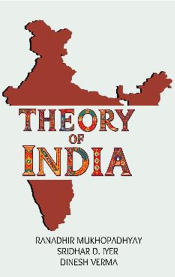
The question arises: Why are India's theory and philosophy necessary to the World? Why should India be discussed at all? The recently published 399-page book THE THEORY OF INDIA examines the above issues. Its panoramic interdisciplinary coverage, strong editorial vision, diversity of contributors, accessible public-facing style, and value-driven framework have been the strengths of this book. In the next thirty-one issues of Melange, we will bring out the excerpts from the 31 topics discussed in the book. For the complete scenario, one must read the book.
THEORY OF INDIA, 399p, ₹650, ISBN- 978-935911162-9
Available with Amazon, Flipkart, Walnut (India-UK-USA)
Episode 1:
Excerpts from Chapter 1 of the Book
Liberal, Secular, Egalitarian, Ethical Democracy (L-SEED)
Pinakpani Bharadwaj
India adopted its Constitution on 26 November 1949, bringing it into force on 26 January 1950 as the foundational document of the Republic. The Constitution’s Preamble encapsulates the collective aspirations of the Indian people and articulates the core values that define the nation’s political and moral identity.
The Framework of Indian Liberal Democracy
At the heart of the Preamble lie several defining attributes of the Indian state. India is
declared
sovereign, affirming its independence and freedom from external domination. The
term socialist, added formally in 1976 but rooted in the Constitution’s spirit from the outset,
reflects a commitment to social justice, equitable distribution of resources, and the reduction
of economic and social inequalities. Secularism underscores the state’s principled neutrality in
matters of religion, ensuring equal respect for all faiths and safeguarding religious freedom.
Democracy affirms popular sovereignty, with political authority derived from the will of the
people, exercised through elected representatives. The designation of India as a republic
further reinforces this democratic ethos by rejecting hereditary rule in favour of an elected
head of state.
Equally central are the ethical promises embedded in the Preamble. Justice—social, economic, and political—seeks to ensure fairness across all spheres of life. Liberty guarantees fundamental freedoms of thought, expression, belief, faith, and worship, protecting individual autonomy. Equality mandates equal status and opportunity for all citizens, rejecting discrimination based on caste, religion, gender, or other identities. Finally, fraternity emphasises social solidarity, the dignity of the individual, and the unity and integrity of the nation.
Despite the clarity and moral strength of this constitutional vision, India’s democratic journey since independence in 1947 has been uneven. There have been recurring instances where the principles of liberalism, secularism, and egalitarianism have been diluted or bypassed. As a result, the realisation of constitutional ideals has proven to be a persistent challenge rather than a settled achievement.
India’s liberal, secular democratic system has long served as the cornerstone of its political order. The Constitution vests ultimate authority in the people and distributes power among the legislature, executive, and judiciary to prevent concentration of authority. This separation of powers, along with constitutional checks and balances, is essential for maintaining social stability, political accountability, and institutional integrity.
However, contemporary Indian society is confronted with deep structural challenges that strain this democratic framework. Social inequality remains pervasive, driven by stark economic disparities that trap millions in poverty. The enduring influence of the caste system continues to shape social and political life, perpetuating discrimination and entrenched hierarchies. Religious polarisation and majoritarian politics have intensified, often undermining secular principles and social harmony. Political corruption, weakening freedom of expression, and concerns over judicial independence further complicate the democratic landscape.
Compounding these issues is a massive backlog in the legal system, disparities in economic and social development across states, and the complexities posed by linguistic and cultural diversity. Together, these challenges reflect a society struggling to reconcile unity with diversity and growth with justice.
Pillars of Indian Democracy: Parliament and Elections
The functioning of Indian democracy rests on three core pillars: Parliament, the electoral process, and federalism. The discussion here focuses on the first two, as they directly shape representative governance and political accountability.
Parliament: Representation and Decline in Deliberation
India’s Parliament symbolises the scale and ambition of its democracy, representing the world’s largest electorate, with nearly one billion eligible voters. The Lok Sabha consists of 543 members, while the Rajya Sabha comprises 250 members, including 12 nominated experts. In principle, Parliament is the supreme forum for debate, legislation, and executive oversight.
Yet, numerous indicators point to a troubling erosion of parliamentary vitality. International assessments and domestic analyses alike highlight rising corruption, social discrimination, religious polarisation, and increasing constraints on free speech and media freedom. These trends weaken Parliament’s role as a deliberative institution.
Data from recent years reveal disturbing patterns in governance and law enforcement. Hundreds of police encounter deaths have been recorded, often concentrated in specific states, raising concerns about due process and the rule of law. The widespread use of demolition drives—frequently justified as administrative or legal action—has displaced millions, often based on allegations rather than convictions. Judicial interventions have repeatedly emphasised the need for legal safeguards and respect for property rights.
The expanding use of laws such as the Unlawful Activities (Prevention) Act and sedition provisions has further intensified debate. Thousands of cases have been filed under these laws, yet acquittal rates remain extremely high, suggesting that they are frequently used to detain or intimidate dissenters rather than to secure convictions. Journalists, activists, and independent thinkers have been particularly affected.
Parliamentary functioning itself has deteriorated. Sitting days have declined sharply over the decades, and disruptions have reduced meaningful debate. A growing majority for the ruling party has facilitated the passage of major legislation with minimal discussion. The referral of bills to parliamentary committees—a critical mechanism for scrutiny—has fallen dramatically, raising concerns about the quality and inclusiveness of law-making.
The suspension of opposition members has reached unprecedented levels, signalling a shrinking space for dissent. Deviations from established parliamentary conventions, such as the prolonged absence of a Deputy Speaker, further weaken institutional norms. Transparency issues, including the handling of political funding and public trusts, have added to concerns about accountability. Recent parliamentary sessions have been among the least productive in decades, underscoring the urgent need for reform.
The Electoral Process: Integrity Under Strain
India’s electoral system, once celebrated for its robustness, now faces significant challenges. These are often described through the “three Ms”: muscle power, money power, and moral decline. Electoral malpractices such as booth capture, vote-buying, and intimidation persist, while criminalisation of politics remains widespread. A substantial proportion of legislators face criminal charges, and wealth concentration among elected representatives raises questions about representativeness.
Populism, caste mobilisation, and religious polarisation have increasingly shaped electoral strategies. Allegations of anti-minority rhetoric and selective use of investigative agencies against opposition parties have fuelled perceptions of institutional bias. Media independence has also come under pressure, limiting the diversity of political viewpoints available to voters.
Concerns about the reliability and transparency of electronic voting machines continue to generate debate, even as voter engagement remains uneven. Questions surrounding the appointment process and the independence of election commissioners have further eroded public trust. The conduct of investigative agencies during recent election cycles has intensified scrutiny, with critics arguing that their perceived alignment with the ruling party undermines democratic fairness.
Reimagining Democratic Reform
In response to these challenges, a comprehensive reform agenda may be proposed to revitalise parliamentary democracy and restore electoral integrity. Central to this vision should be the recognition that democratic institutions must evolve to remain credible, inclusive, and effective.
One key proposal involves restructuring the parliamentary calendar. Instead of three short annual sessions, four regular sessions of approximately 18 days each are recommended. This would significantly increase total sitting days and deliberation hours over a five-year term, strengthening legislative scrutiny and accountability.
Raising the minimum age for parliamentary candidates is suggested as a means of encouraging maturity, experience, and ethical responsibility among lawmakers. Beyond age, character and integrity are emphasised as essential qualifications for public office, given the pervasive influence of corruption and nepotism.
A transformative proposal is the introduction of a Character Integrity Index (CII), leveraging artificial intelligence to assess the ethical, financial, and moral credentials of political candidates and public officials. By institutionalising integrity as a prerequisite for public service, the CII aims to restore trust and exclude individuals with compromised records from positions of power.
Reforms to the Election Commission and investigative agencies are also prioritised. A transparent, multi-stakeholder selection mechanism involving the executive, judiciary, and opposition is proposed to ensure institutional independence and neutrality.
Structural reforms to the Rajya Sabha are envisioned to enhance proportional representation and democratic legitimacy. Additional proposals seek to strengthen federalism by redefining the role of state governors, limiting political tenures, rationalising constitutional offices, and simplifying governance structures.
Electoral Synchronisation and Campaign Reform
To address electoral fatigue and instability, a synchronised election model is proposed, designating a single Election Day (say 27th December) for the entire country. The proposed election framework would stagger Assembly elections so that eight states go to the polls each year on the 27th December in the interval between two successive Parliamentary elections, ensuring continuity, predictability, and sustained democratic engagement.
Innovative measures to enhance voter participation include using secure bank ATMs as supplementary voting platforms, particularly benefiting migrant populations. Stricter anti defection laws, limits on contesting constituencies, and reforms to no-confidence procedures aim to enhance political accountability.
Campaign practices would also be reformed to reduce disruption of traffic, promote inclusivity, and ensure equitable media access. Emphasis would shift from mass rallies to more responsible and accessible forms of political engagement.
India’s Constitution sustains unity in diversity, but democratic decline demands urgent reform. Institutional, electoral, and integrity-based measures, as suggested here, may restore trust, transparency, and accountability, rejuvenating governance rooted in constitutional values, ethical leadership, and the people’s will.
With doctoral degrees in both natural and social sciences, the author explores the intersection of science, ethics, and governance
~~~~~~Pinakpani Bharadwaj
About the Author:
Pinakpani Bharadwaj
Comments & Related Articles
Read more reflections on life, art, and the human spirit from our contributors.