India is often celebrated as a young nation, brimming with potential and energy. However, beneath this facade lies a pressing and often overlooked crisis: vision loss and preventable eye diseases are quietly emerging as one of the country’s most significant public health challenges. This issue doesn't just hinder productivity; it threatens dignity, education, and even the very nature of ageing itself.
Over 285 million people globally live with visual impairment, much of which can be prevented or treated with timely diagnosis. India faces a significant burden due to its large population, rising diabetes rates, healthcare access disparities, and an ageing demographic. Addressing this crisis requires innovative techniques and cutting-edge technologies in eye care. It’s time to focus on this crucial issue for a clearer vision for the future.
I recently discussed this crucial gap in our healthcare system with Dr Dinesh Verma (FRCS), a renowned ophthalmologist. He is not only a high-volume cataract and vitreoretinal surgeon but also an innovator and author with experience at top institutions like Johns Hopkins and Cambridge. His work in artificial intelligence, virtual reality, and augmented reality is revolutionising diagnostic practices in ophthalmology, improving accessibility and patient outcomes. Dr Verma is currently the Founder CEO of Dumfries Visionostics.

Dr Dinesh Verma
Ophthalmologist
An Interview with Dr Dinesh Verma
A conversation on eye health, diagnostics, and preventive healthcare
by Ranadhir Mukhopadhyay
Explorer of contemporary social nuances

Ranadhir Mukhopadhyay
Interviewer
🎧 Listen to the Interview
A narrated audio version of the interview with Dr Dinesh Verma. Click play to listen while reading or on the move.
RM: What is your perspective on the impact of vision loss and preventable eye diseases in a large country like India?
DV: India crossed 1.43 billion people in 2023, making it the most populous country in the world. Over 65% of Indians still live outside major metropolitan areas, where specialist healthcare—especially ophthalmology—is scarce.
At the same time, India is witnessing:
First, a sharp rise in diabetes, with over 100 million diabetics, many at risk of diabetic retinopathy. Second, a growing elderly population, expected to cross 20% by 2050, increasing vulnerability to glaucoma, cataract, and macular degeneration. And third, millions of school-age children with undiagnosed refractive and colour-vision disorders affecting learning outcomes.
Despite these realities, eye care in India remains largely reactive, clinic-based, and urban-centric. By the time patients reach tertiary hospitals, vision loss is often advanced and irreversible.
RM: How do you see the diagnostic gap?
DV: India’s ophthalmology market is estimated at nearly ₹10,000 crore, yet it remains structurally underserved, especially in rural and semi-urban regions.
Traditional diagnostic equipment, such as fundus cameras, OCT systems, and perimetry devices, is expensive, bulky, and requires trained personnel. This creates three systemic gaps: late detection of eye disease, high cost per diagnosis—making mass screening unviable, and low penetration beyond hospitals and eye camps.
What India needs is not merely more infrastructure, but diagnostic democratisation—the ability to detect disease early, affordably, and at scale.
RM: You are using many technical abbreviations. Can you please make it simpler for our readers?
DV: I am sorry. I must clarify.
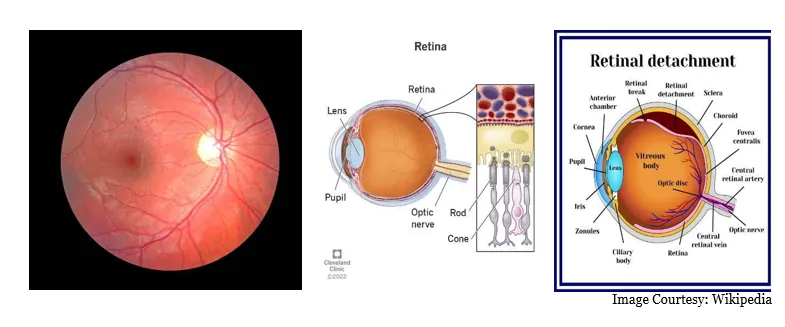
A fundus camera is a specialised low-power microscope with a camera, used to capture detailed images of the fundus—the back inner wall of the eye, including the retina, optic nerve, and macula—for diagnosing and monitoring eye conditions like diabetic retinopathy, glaucoma, and macular degeneration.
OCT systems refer to Optical Coherence Tomography devices, advanced non-invasive imaging tools that use near-infrared light to create high-resolution, cross-sectional images of tissue structures in real time. These have revolutionised ophthalmology and are increasingly used in cardiology, surgical guidance, and medical research.
RM: Why do you think new techniques matter?
DV: Innovative diagnostic techniques—particularly those combining AI, cloud computing, and portable hardware—offer a way out of this impasse.
New-generation devices seek to recreate the ophthalmologist’s diagnostic environment in compact, low-touch formats, allowing eye screening to move closer to where people live, work, and study.
One such approach is exemplified by VR/AR-based eye diagnostics integrated with AI-driven retinal imaging, designed to detect not only common eye diseases but also early neurological and systemic conditions. These technologies aim to shift eye care from hospital-centric to population-centric models.
RM: In such a case, early detection is vital, as also the economic logic, is it not?
DV: I completely agree with you. Vision loss is not merely a medical issue—it is an economic one.
The World Bank has repeatedly noted that untreated visual impairment leads to lower workforce participation, reduced educational attainment, and higher long-term healthcare costs.
In India, where informal labour dominates and social security nets are thin, preventable blindness can push families into intergenerational poverty. Early detection through mass screening is therefore not a cost—it is an investment in human capital.
RM: It is often said that eyes say beyond vision; it is, in fact, a health window.
DV: Absolutely. Modern ophthalmic diagnostics are revealing something remarkable.
The retina is not just an eye structure, but a window into systemic health. Retinal scans can provide early signals of diabetes progression, cardiovascular disease, and neurodegenerative disorders such as Alzheimer’s.
This transforms eye screening into a preventive health gateway, aligning seamlessly with India’s push towards predictive and preventive healthcare under national health missions.
RM: For any innovation to succeed in India, it must meet three criteria: affordability, portability, and scalability. Are these technologies designed for Indian realities?
DV: Advanced diagnostic platforms now under development use miniaturised retinal cameras, cloud-based AI analytics, and IoT connectivity for remote diagnosis and monitoring.
Such systems can operate in clinics, schools, factories, and even homes—bridging the rural-urban divide and enabling task-shifting to trained health workers rather than specialists.
Crucially, these techniques are not intended to replace ophthalmologists but to extend their reach, allowing specialists to focus on treatment rather than first-level screening.
RM: How do you see your current association, Dumfries Visionostics, contributing positively to these challenges?
DV: I am happy that organisations such as Dumfries Visionostics are contributing meaningfully to healthcare by focusing on innovative diagnostic solutions.
Their work enhances diagnostic accuracy, supports timely intervention, and raises community awareness about the importance of early detection, laying a foundation for future healthcare advancements.
RM: Thank you very much, Dr Verma, for your time and insights.
This conversation highlights a crucial truth: eye health must be seen not as a specialised medical concern, but as a foundational pillar of human development and dignity.
Interview conducted by Ranadhir Mukhopadhyay
About the Interviewee:
Dr Dinesh Verma is the Founder & CEO of Dumfries Visionostics, working at the intersection of ophthalmology, artificial intelligence, and immersive diagnostic technologies.
About the Interviewer:
Dr Ranadhir Mukhopadhyay explores the intersection of science, ethics, and governance. With doctoral degrees in both natural and social sciences, he offers a unique interdisciplinary perspective.
Comments & Related Articles
Continue the conversation and explore related perspectives.